
Patience in the Quran Is More Than Simply Waiting
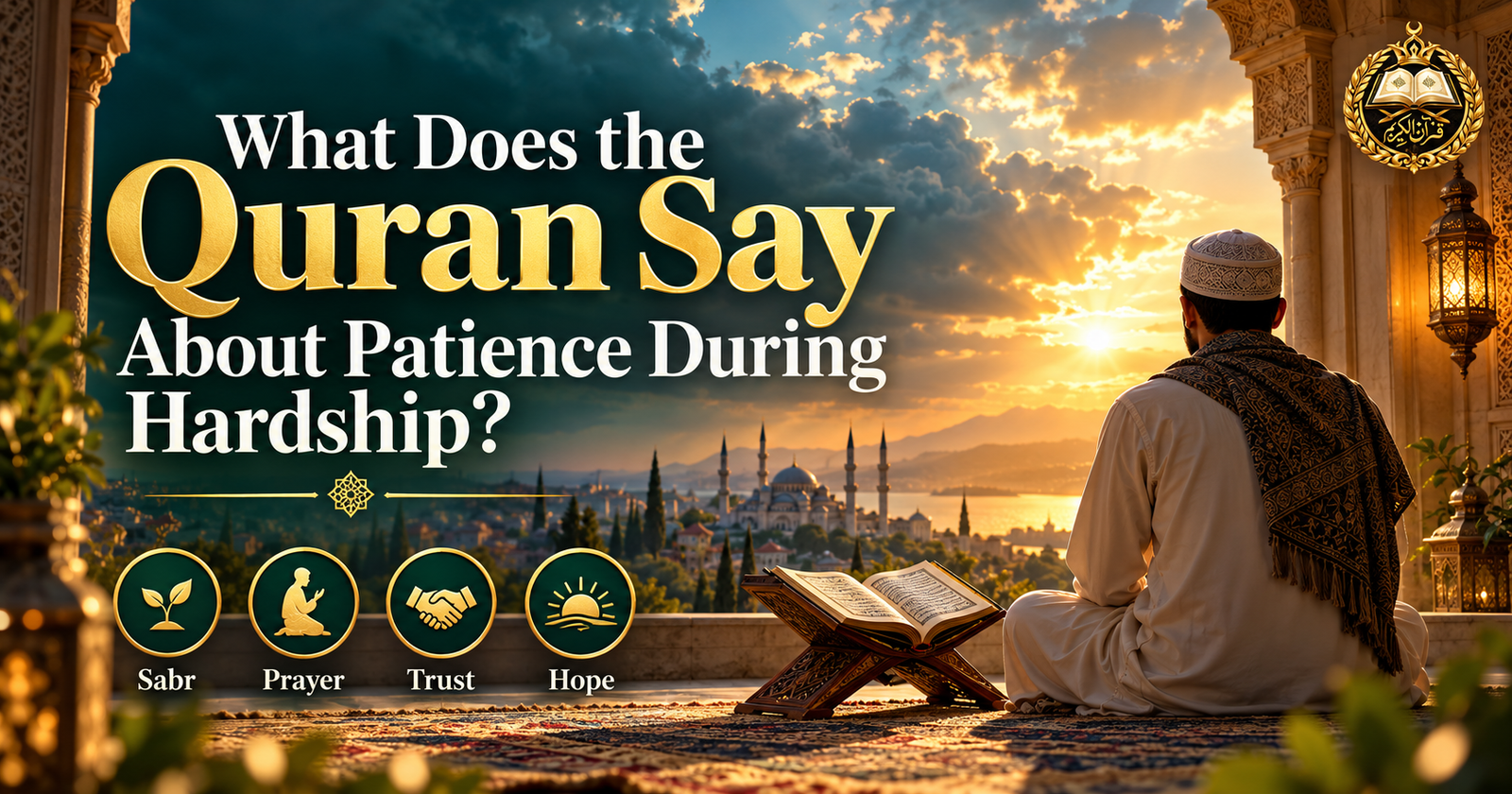
Hardship is part of human life. A person may face loss, fear, financial difficulty, illness, disappointment or uncertainty. The Quran does not teach believers to pretend that these experiences are easy. Instead, it teaches them how to respond with patience, prayer, trust in Allah and hope.
In the Quran, patience — sabr — is not passive surrender. It means remaining firm upon what is right, controlling one’s response during difficulty and continuing to obey Allah even when circumstances are painful.
1. Seek Help Through Patience and Prayer
One of the clearest Quranic instructions appears in Surah Al-Baqarah 2:153.
Allah tells the believers to seek help through patience and prayer and reminds them that He is with those who remain patient.
This verse connects two powerful responses to hardship:
Patience helps a person remain steady, while prayer keeps the heart connected to Allah.
Difficulty can make a person feel that everything is beyond control. Salah redirects the believer toward the One who remains in control of all things.
2. Tests Are Part of This Life
The Quran openly explains that believers will experience tests.
In Surah Al-Baqarah 2:155–157, Allah mentions tests involving fear, hunger, loss of wealth, lives and fruits. The verses then give glad tidings to those who respond patiently.
When calamity reaches them, they remember that they belong to Allah and will ultimately return to Him.
This does not mean that sadness is forbidden. Rather, the Quran teaches the believer not to allow pain to destroy faith, hope or connection with Allah.
Trials can become moments of spiritual growth when they bring a person closer to Allah rather than farther away.
3. Allah Is With Those Who Are Patient
The Quran repeatedly connects patience with Allah’s help and nearness.
Knowing that Allah is with the patient changes the way hardship is understood. A difficult situation may remain difficult, but the believer does not have to face it spiritually alone.
Patience therefore involves continuing to worship, making dua, avoiding sinful reactions and trusting that Allah knows what the servant is experiencing.
This is why patience is not weakness. It is spiritual strength under pressure.
4. The Reward of Patience Is Beyond Measure
In Surah Az-Zumar 39:10, the Quran describes an extraordinary reward for those who remain patient.
Allah promises that the patient will receive their reward without measure.
Many deeds in Islam have described rewards, but patience receives exceptional emphasis. This teaches us that the struggles a believer quietly endures are not forgotten by Allah.
A hardship may be hidden from other people. The tears, fears and sacrifices may never be fully understood by anyone else.
But they are known to Allah.
5. Hardship Does Not Last Forever
One of the most comforting Quranic messages appears in Surah Ash-Sharh 94:5–6.
The Quran repeats the message that with hardship comes ease.
Notice the lesson: difficulty and relief are not presented as disconnected realities. Even during hardship, Allah can create forms of ease, support, understanding and spiritual growth.
A believer should therefore avoid concluding that today’s difficulty defines the entire future.
Situations change. Hearts heal. Doors open. And Allah can create solutions from places a person never expected.
6. Patience Comes With Reliance Upon Allah
True patience does not mean that a person must carry every burden through personal strength alone.
In Surah An-Nahl 16:127, the Quran teaches that patience is ultimately through Allah.
This is important because people sometimes think:
“I need to be strong enough.”
The Quranic perspective is different. A believer asks Allah for the strength to remain patient.
That can include sincere dua, prayer, remembrance of Allah and taking responsible practical steps to improve the situation.
7. Patience Does Not Mean Doing Nothing
Islamic patience should not be confused with refusing to act.
If a problem has a lawful solution, a believer should pursue it.
If there is illness, seek appropriate treatment. If there is financial difficulty, work toward lawful solutions. If a relationship problem requires wise communication, take responsible action.
Patience means doing what is right without allowing frustration, anger or despair to pull you away from Allah.
The believer acts where action is possible and trusts Allah regarding what remains beyond personal control.
8. How to Practice Quranic Patience During Difficult Times
When hardship becomes heavy, try combining several Quranic principles:
- Maintain your salah and ask Allah sincerely for help.
- Remember that tests are part of worldly life.
- Avoid making permanent conclusions during temporary pain.
- Take responsible action where you have control.
- Leave what you cannot control to Allah.
- Read relevant Quran verses together with their surrounding context.
- Remember that patience has a reward known fully only to Allah.
Patience often develops gradually. A person may struggle one day and feel stronger the next. What matters is repeatedly returning to Allah.
Explore More Quranic Guidance
For verses specifically related to patience and steadfastness, explore Qur’an by Topic on Qur’ani Irshadaat.
You can also visit Find Peace for Quranic guidance related to worry, fear, grief and hopelessness.
If hardship is causing anxiety or emotional pressure, read our article:
What Does the Quran Say About Anxiety and Finding Peace?
For deeper study, use the Quran Library to read the surrounding verses, translations and available tafsir rather than studying an isolated verse without its context.
Final Reflection
The Quran does not promise believers a life without hardship. It teaches them how to pass through hardship without losing their relationship with Allah.
Patience means remaining faithful when life becomes difficult.
Pray. Take responsible action. Continue doing what is right. Ask Allah for strength. And remember that no sincere patience is lost with Him.
Important note
Quranic guidance can provide spiritual comfort and strength, but serious or persistent physical, psychological or emotional difficulties may also require appropriate professional help. Seeking suitable assistance does not conflict with reliance upon Allah.